🪺 Parent Nest
Practical products that make everyday parenting feel a little easier

Bottle Nest - Anti-Colic, Slow-Flow Nipple, Silicone

Style: 150ml — 0 to 3 Months (Small Round Hole)
✓ Final price · 🚚 Free shipping · No hidden fees $29.99 $33.32 Save 10% In Stock
Only a few remaining - parents are grabbing these fast
✓ Discount active - buy more to save more
Great Start
1
unit
10% off
Most Popular
2
units
25% off
Best Value
3
units
35% off
Ships in 1-2 days · Tracked ✅ 30-day guarantee 🚚 Free shipping
✅ 30-day guarantee 🚚 Free shipping
PayPal Visa Mastercard Amex 🔒 SSL

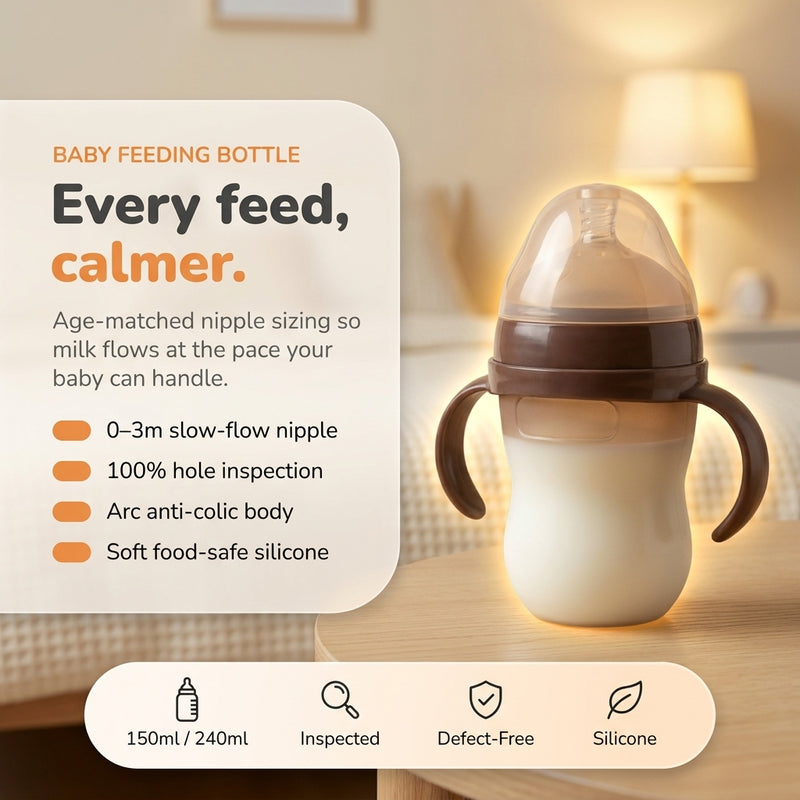
Bottle Nest is the anti-colic silicone feeding bottle built for parents who are done with broken promises. Every bottle ships with age-matched nipple sizing and 100% nipple hole inspection — so the slow-flow your baby needs is the slow-flow they actually get, every feed.

What's included

  • 1 × Bottle Nest silicone feeding bottle (150ml or 240ml — see variant selected)

Good to know

  • Age range: 0–12+ months (select the variant matched to your baby's age)
  • Capacity: 150ml or 240ml — select at checkout
  • Shape: Arc-form body [Needs CJ verification — confirm exact dimensions]
  • Weight: Approximately 192g (150ml) / 206g (240ml) including packaging
  • Material: Silicone
  • US delivery: Approximately 9–12 days from order
  • Free shipping: Included on all Parent Nest orders, no minimum required
🚚
Free standard shipping
Free shipping on every order, with tracking shared as soon as your parcel is dispatched.
30-day satisfaction guarantee
Not happy with your order? Contact us within 30 days - we’ll replace it or refund you. No hassle, no questions.
💬
Helpful support
Support is available Mon-Sat, 9am-6pm for product questions, spelling checks, shipping help, or order updates.
✅ 30-day guarantee 🚚 Free shipping 🔒 Secure checkout

3 Reasons Your Baby Is Still Gassy After Every Feed

It's not the formula. It's not your technique. It's almost always the bottle.

The nipple hole is the wrong size
💨

The nipple hole is the wrong size

Most baby bottle manufacturers print a flow-rate label on the box, but very few inspect every individual nipple hole before shipping. The result: a "slow-flow" nipple that flows at medium or fast rate because the hole is slightly too large. Your baby has no choice but to gulp to keep up. Every gulp swallows air. That air sits in the gut, causes gas and bloating, and turns feeding time into an ordeal. No amount of paced feeding or winding technique fixes a hole that's the wrong size.

Warning signs
  • Gulping or spluttering during feeds
  • Pulling off the bottle repeatedly mid-feed
  • Arching back or squirming while feeding
  • Excessive gas or bloating within 20–30 minutes of a feed
  • Crying that only settles after a long winding session
Air enters the bottle as it empties
🌀

Air enters the bottle as it empties

When a baby feeds from a conventional bottle, the liquid is replaced by air as it empties. That air sits in the nipple and the neck of the bottle—and some of it gets swallowed with each suck. In newborns especially, the digestive system is immature and poorly equipped to move trapped gas quickly. The gas sits in the gut, causes cramps and discomfort, and produces the restless, gassy, inconsolable baby that every new parent recognises. Anti-flatulence design features like an arc-shaped bottle body help reduce the amount of air that pools in the feed path during use.

Warning signs
  • Hard, distended-looking belly after feeds
  • Pulling up knees toward tummy
  • Passing lots of wind but still uncomfortable
  • Fussiness that peaks 15–30 minutes after a feed
  • Short, broken sleep cycles after feeding
The bottle isn't matched to your baby's stage
🔄

The bottle isn't matched to your baby's stage

A baby's suck strength, swallowing coordination, and stomach capacity all change dramatically between 0 and 12 months. A nipple that was right at 8 weeks is almost always wrong at 5 months. Too slow a flow for an older baby and they work so hard to feed that they exhaust themselves and swallow excess air from effort. Too fast for a younger baby and they're overwhelmed and gulping. Most bottle ranges cover this with 3–4 nipple stages, but if the hole size isn't inspected or the stages aren't clearly defined, parents end up with the wrong flow at the wrong time—and a baby who shows all the signs of colic even when the formula is fine.

Warning signs
  • Baby seems frustrated or bored during feeds
  • Feeds taking much longer than expected for age
  • Milk running out of the corner of baby's mouth
  • Waking more frequently than expected between feeds
  • Feed-related crying that doesn't match hunger cues
🔗
The Common Thread

All three causes share the same root: a bottle that isn't precisely matched to your baby's stage delivers the wrong flow rate, swallows air, and makes colic worse—not better.

Why Bottle Nest Works When Others Don't

Why Bottle Nest Works When Others Don't
The cause

Nipple hole size is inconsistent batch-to-batch

How we solve it

100% nipple hole inspection before shipping

The result

You get the slow-flow you paid for — every time

The cause

Air pools in the bottle during feeds

How we solve it

Arc-shaped anti-flatulence body design

The result

Less air swallowed, less gas, calmer feeds

The cause

Bottle isn't matched to baby's developmental stage

How we solve it

Age-specific nipple variants: 0–3m, 3–6m, 6–12m, 12m+

The result

Flow rate that grows with your baby — no guessing

What sets it apart

Parents keep replacing bottles that don't deliver

How we solve it

Defect-free replacement guarantee

The result

One bottle that actually works — backed by a real promise

← swipe to read →

🔍
Age-matched nipple sizing
Four stage-specific flow rates from newborn through 12+ months—no guessing
100% nipple hole inspection
Every bottle inspected before shipping so you get consistent, reliable flow—not broken promises
💨
Anti-flatulence arc design
Reduces air intake during feeds so less gas enters your baby's belly and settles faster
🛡️
Defect-free replacement guarantee
If your bottle arrives with a nipple defect, we replace it—no faff, no lengthy returns

How It Works

Select your baby's age
1
Select your baby's age

Choose the variant that matches your baby's current feeding stage—0–3 months, 3–6 months, 6–12 months, or 12+ months

Feed with confidence
2
Feed with confidence

The age-matched nipple and inspected hole size mean milk flows at exactly the pace your baby can handle

Settle faster
3
Settle faster

Less air swallowed, less gas trapped, less crying after feeds—calmer evenings and better sleep

From Dreading Every Feed to Actually Enjoying Them

You've read every forum thread. You've tried the paced feeding. You've bought the bottles with the fancy valve system and the ones with the vented base. And still, every feed ends the same way—a gassy, crying baby and a parent who feels like they're failing. You're not failing. You just haven't had a bottle that was actually built to do what it says. That's what changes now.

From Dreading Every Feed to Actually Enjoying Them
😮‍💨

Calmer feeds from day one

When the flow rate is right, your baby doesn't have to fight the bottle or gulp to keep up. Feeds become quieter, slower, and more settled—which means less gas, less crying, and less time winding after every feed.

💸

No more wasted money on bottles that don't work

The average parent of a gassy newborn tries 2–3 bottle brands before finding one that works. Bottle Nest is designed to be the last bottle you buy—backed by an inspection process and a defect-free replacement guarantee so you don't have to gamble again.

🌙

More settled sleep after feeds

A baby with trapped gas doesn't sleep. When feeds produce less air intake, the post-feed discomfort that disrupts sleep cycles is reduced. More settled evenings. Longer stretches. A baby who actually goes down after a feed instead of lying awake in discomfort.

Age-matched nipple sizing from 0–12+ months
Anti-flatulence arc body design
100% nipple hole inspection [Needs CJ verification]
Defect-free replacement guarantee
Free US shipping—no minimum required

Problems It Fixes

Real frustrations. Simple solutions. That's what Parent Nest is built on.

😤
My baby screams in pain after every feed
Age-matched slow-flow nipples reduce the air intake that causes gas and bloating.
📦
They choke and splutter every time I feed them
The correct hole size for your baby's stage means milk flows at a pace they can handle.
⏱️
I've already tried two 'anti-colic' bottles that didn't work
Bottle Nest uses 100% nipple hole inspection so the flow rate is actually what it says on the box.
😩
I don't know which bottle size or nipple to get
Select your baby's age at checkout—the right nipple size is already matched to that variant.
🎒
Every bottle brand makes the same claims
We back ours with a defect-free replacement guarantee—if the nipple hole is wrong, we replace it.
Feeding time has become something I dread
Calmer, slower feeds with less crying means you can actually enjoy feeding your baby again.

Real Moments When Bottle Nest Makes All the Difference

From night feeds to introducing solids, the right bottle makes every stage easier.

🌙
2 a.m. feeds that don't turn into a gas emergency
Your baby falls asleep settled instead of waking in discomfort 20 minutes later
🍽️
Introducing solids at 5–6 months
The matching nipple size ensures your older baby isn't frustrated by a flow that's suddenly too slow
👶
First feeds with a new carer
You don't have to explain feeding technique—the bottle does the work by delivering the right flow rate
Bottle feeds on the go
Lightweight silicone that fits naturally in small hands—whether it's your hand or your toddler's
😴
Bedtime routine
A calm, settled feed means your baby goes down drowsy instead of wired and gassy
🤝
Expressing and bottle feeding combo
Consistent flow across all bottles means your baby isn't confused by flow changes between breast and bottle

Why Nothing Else Has Worked

The usual fixes don't work because they don't address the root cause — the flow rate is wrong.

Why Nothing Else Has Worked
The usual fix
Why it fails
What we do instead
🔄Buying a "slow-flow" bottle from a big brand
Nipple holes aren't inspected — slow-flow is a label, not a guarantee
Bottle Nest inspects every nipple hole before shipping [Needs CJ verification]
🔄Trying paced feeding technique
Paced feeding helps but can't compensate for the wrong flow rate
The right hole size means paced feeding actually works as intended
🔄Switching formula to fix gas
Formula is rarely the cause — air intake from fast flow is
Age-matched slow flow reduces air intake without changing formula
🔄Using an anti-colic vented bottle
Venting helps with vacuum build-up but doesn't fix oversized nipple holes
Bottle Nest combines anti-flatulence arc design with correct nipple sizing
🔄Trying a different nipple stage (too early or too late)
Guessing the right stage often means getting it wrong for weeks
Select your baby's age at checkout — the right stage is already matched
🔄Winding longer after every feed
Winding removes trapped air but doesn't stop more air going in next feed
Less air in during the feed means less winding needed after it

← swipe to compare →

Frequently Asked

Yes. The Variant 1 (150ml, 0–3 months, small round hole) is designed for newborns from birth. The small round hole nipple is matched to the weaker suck strength and smaller stomach capacity of a newborn, so the flow rate doesn't overwhelm them. Always supervise your baby during feeds. If your newborn has any specific medical feeding requirements, speak with your paediatrician before introducing a new bottle. Material safety certifications are confirmed at the product level — see our product specs for current verified certifications. [Needs CJ verification — confirm BPA-free and food-grade silicone status before publishing this answer in full]
Gas and colic in bottle-fed babies is most commonly caused by air intake during feeds. When the nipple hole is too large — even slightly — milk flows faster than a baby can comfortably swallow. To keep up, they gulp. Each gulp swallows air. That air sits in the stomach and intestines, causes pressure, bloating, and cramps, and is the main driver of the unsettled, crying behaviour that's labelled as colic. Bottle Nest's age-matched slow-flow nipples deliver milk at a rate matched to your baby's swallowing ability, so there's less need to gulp and less air gets in with each feed. The arc-shaped anti-flatulence body also helps reduce air pooling in the bottle during the feed itself.
Bottle Nest is made from silicone. [Needs CJ verification — confirm full material spec, food-grade status, and BPA-free claim directly from CJ supplier before publishing.] For cleaning, we recommend washing by hand with warm soapy water or on the top rack of a dishwasher. For sterilisation, the bottle is compatible with standard steam sterilisers and cold-water sterilising tablets. [Needs CJ verification — confirm sterilisation compatibility from CJ supplier before publishing sterilisation claims.]
The 150ml bottles are sized for younger babies — typically 0–6 months — whose smaller stomach capacity means they take smaller feeds more frequently. The 240ml bottles are designed for older babies from around 3–4 months onward, as feed volumes increase. Both sizes are available across the same age-matched nipple stages. If you're unsure which size to start with, most parents of newborns begin with the 150ml variant and move to 240ml when feeds regularly exceed the smaller bottle's capacity. The rice cereal variants and suction faucet variants are specialist options for weaning and transition feeding — see below for more on those.
Select the variant that matches your baby's current age at checkout: 0–3 months uses the small round hole nipple, 3–6 months uses the medium round hole, 6–12 months uses the large round hole, and 12 months and over uses the cross-cut nipple for thicker or faster flows as your baby's feeding develops. If your baby was premature, consider starting one stage younger than their corrected age. If your baby seems to be working very hard to feed or is taking unusually long feeds, that can be a sign the flow is too slow for their stage — move up one size. If they're gulping, spluttering, or showing signs of gas, that's often a sign the hole is too large — move down one size.
Shipping to the US takes approximately 9–12 days from the date of order. Shipping is free on all Parent Nest orders — there's no minimum order value and no hidden shipping charge at checkout. You'll receive an order confirmation email when your order is placed and a shipping notification with tracking when your bottle dispatches. If your order hasn't arrived within 15 days, contact us at the email in your confirmation and we'll chase it up straight away.
We stand behind the quality of every Bottle Nest. If your bottle arrives with a defective nipple hole — meaning the hole size doesn't match the stated stage, or there is a visible manufacturing defect — we will replace it at no charge. Contact us within 14 days of receiving your order with a photo of the defect and we'll sort a replacement immediately, no return required. For change-of-mind returns, we accept unused items in original packaging within 30 days of delivery. Return shipping for change-of-mind returns is at the buyer's cost. If your baby simply didn't take to the bottle and it shows no defect, we're happy to help troubleshoot — sometimes a transition to a new bottle takes a few days of consistent use.
Anti-colic is one of the most widely used terms in baby product marketing, and one of the least regulated. A bottle can legally carry an anti-colic label based on a venting feature or design element without any requirement to demonstrate that nipple hole sizes are inspected, consistent, or actually slow-flow in practice. The most common reason a labelled anti-colic bottle doesn't reduce gas is that the nipple hole is larger than intended — either by design or by quality inconsistency. An oversized hole produces fast flow regardless of any venting system. Bottle Nest addresses this directly by matching nipple hole size to your baby's stage and applying inspection before shipping. It's not a miracle fix — but it removes the most common hidden cause of feed-related gas that other bottles ignore.
Yes. The arc-shaped body is compact, lightweight, and sits stably in a bottle holder or changing bag pocket. The silicone construction means it's durable enough for daily use on the go without the fragility of glass options. For travel, we'd recommend pre-preparing formula in a sealed container and assembling the feed when needed, rather than storing pre-made formula in the bottle for extended periods. The bottle can be rinsed and cleaned easily on the go, and is compatible with standard portable sterilising solutions. [Needs CJ verification — confirm silicone durability and travel suitability from CJ supplier before publishing final version.]
The rice cereal variants (Variants 9 and 10) are designed for the early weaning stage, when parents introduce thicker foods like baby rice cereal or puréed blends through a bottle. The nipple on these variants is configured for thicker consistencies that would block a standard round-hole nipple. The suction faucet variants (Variants 11 and 12) are transition feeding tools — they help babies move from bottle to cup by introducing a different suction mechanism in a familiar bottle-shaped format. These specialist variants are available in the same 150ml and 240ml sizes as the standard feeding bottles. If you're just starting out with a newborn and standard milk feeding, the standard age-matched variants (1–8) are the right starting point. [Needs CJ verification — confirm exact nipple mechanism and configuration of rice cereal and faucet variants from CJ supplier before publishing.]